Mastering Guitar Chords for Fingerstyle: A Practical Guide

Understanding Fingerstyle and Guitar Chords
Fingerstyle guitar is a versatile technique that involves plucking individual strings with your fingers instead of using a pick. This approach allows guitarists to combine melody, harmony, and rhythm simultaneously, creating rich and detailed sounds. Mastering guitar chords suitable for fingerstyle is essential because it shapes the foundation of your playing and enables you to explore various musical styles effectively.
Unlike strumming, fingerstyle requires more precise finger placement and control over each string. Starting with the right guitar chords helps build this skill and improves your overall finger dexterity.
Below is a visual guide to proper finger placement for common guitar chords used in fingerstyle playing.

Essential Guitar Chords for Fingerstyle Beginners
For those new to fingerstyle, beginning with simple open chords offers a smooth learning curve. The following chords are highly recommended:
- C major: A warm, versatile chord often used in many songs.
- G major: Bright and full, it complements fingerstyle arrangements well.
- A minor: Gives a soft, melancholic tone, great for fingerstyle ballads.
- E minor: The simplest open minor chord and easy to transition to other shapes.
These chords are easy to form and allow you to practice finger independence, essential in fingerstyle technique.
Tips for Accurate Finger Placement
- Position your fingers just behind the fret, not on top of it, for clear sound.
- Press firmly but avoid excess tension.
- Keep your thumb anchored behind the neck for stability.
Developing Fingerstyle Technique with Chord Playing
Understanding how to pluck strings individually forms the heart of fingerstyle. Place your thumb on the bass strings (6th, 5th, and 4th strings) and your index, middle, and ring fingers on the treble strings (3rd, 2nd, and 1st strings). This positioning allows controlled plucking of each note within a chord.
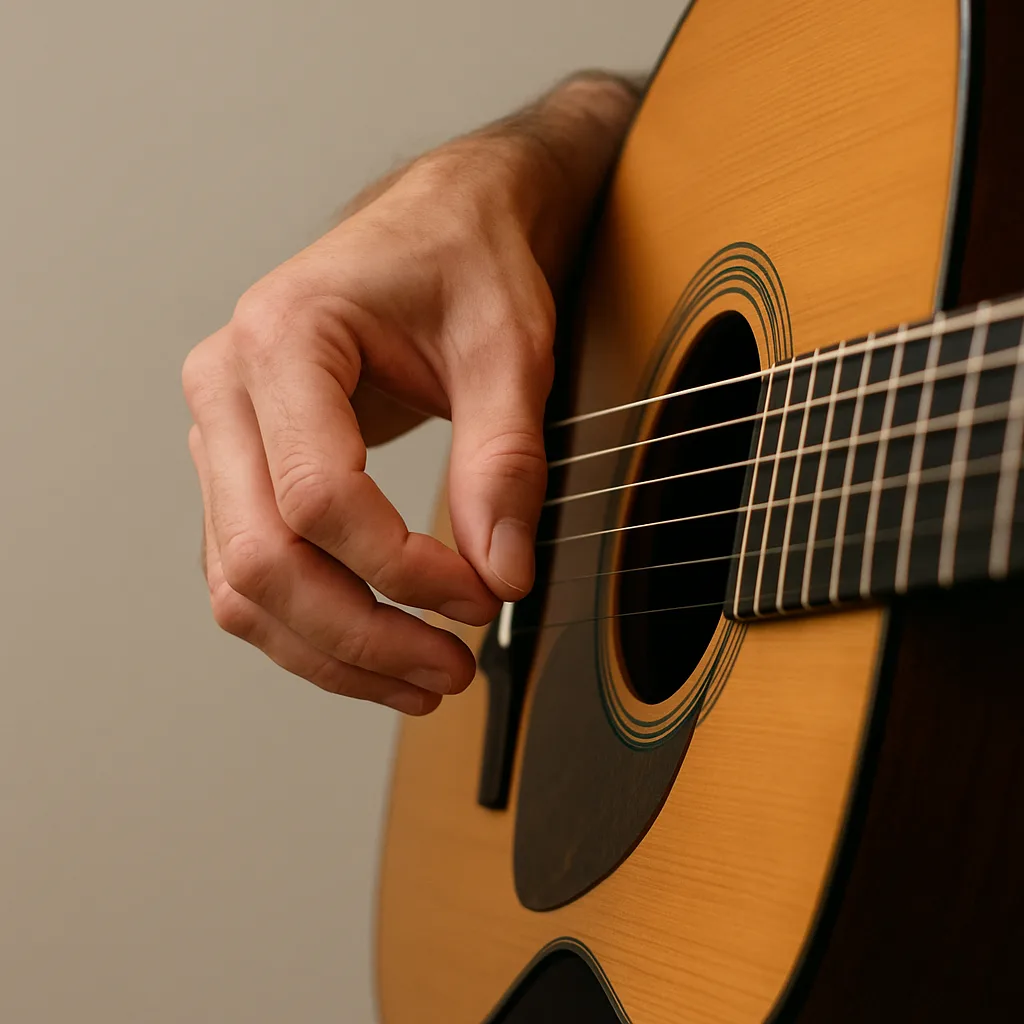
Fingerstyle Plucking Patterns
Begin with simple plucking patterns such as:
- Thumb: Bass string (root note of chord)
- Index: 3rd string
- Middle: 2nd string
- Ring: 1st string
Practice these patterns slowly, focusing on timing and clarity of each note.
Practical Exercises for Mastering Fingerstyle Guitar Chords
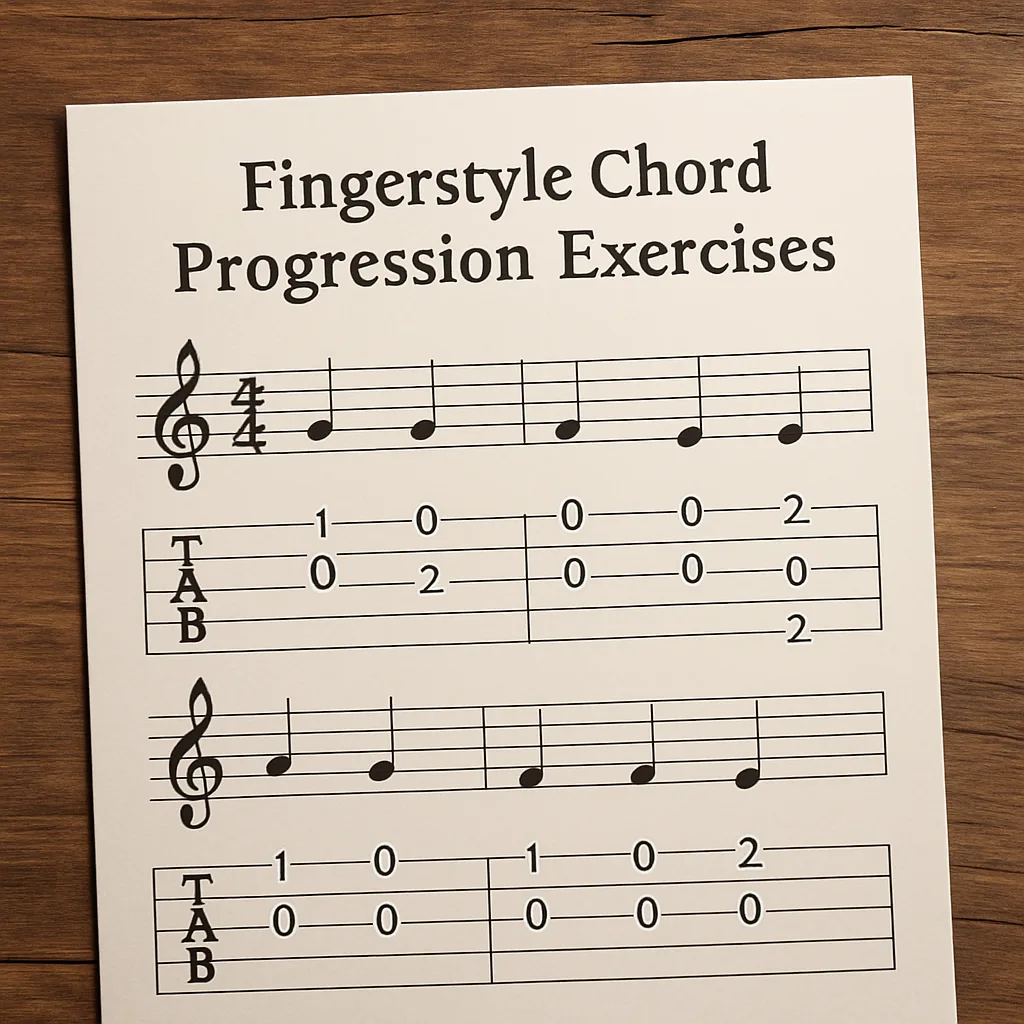
Consistent practice is key. Here are exercises to integrate guitar chords with fingerstyle technique effectively:
- Start by playing a chord such as C major.
- Pluck each string in the chord individually using the fingerstyle pattern.
- Switch between chords smoothly (e.g., from C major to G major) while maintaining the plucking pattern.
- Use a metronome set at a slow tempo to improve timing.
Below is an example of a simple fingerstyle chord progression exercise sheet.
Conclusion
Mastering guitar chords with fingerstyle technique opens up a realm of musical expression that combines melody and harmony. By starting with essential chords and developing finger independence through focused exercises, you can build a strong foundation for fingerstyle playing. Remember to practice regularly, be patient with your progress, and enjoy the beautiful sounds you create.